
The UK government has announced a £40 million NHS winter support programme designed to provide additional GP care to up to 300,000 vulnerable patients across England. The initiative aims to prevent serious illnesses, reduce avoidable hospital admissions and help people with long-term health conditions receive appropriate treatment closer to home.
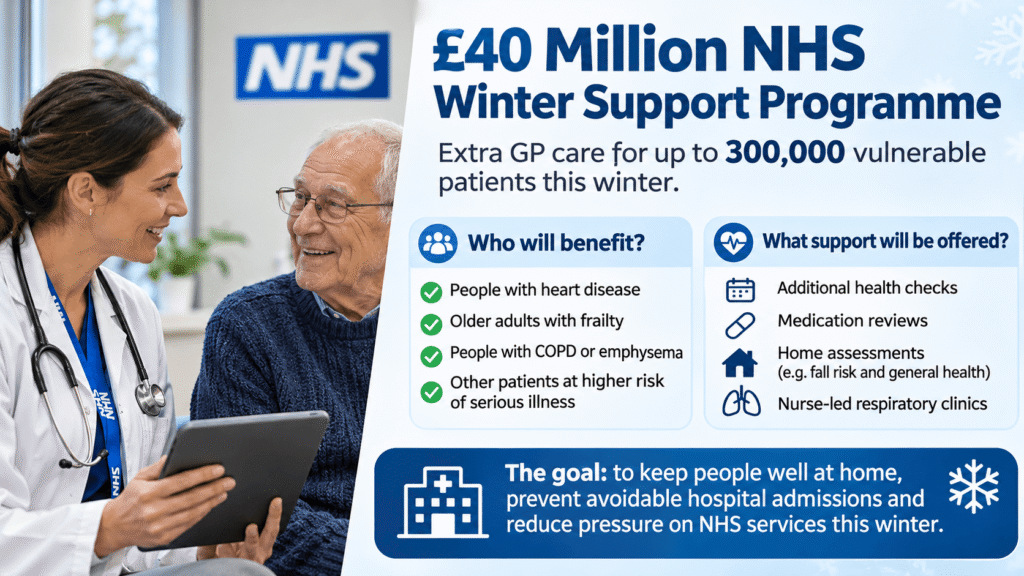
The programme will focus on patients living with heart disease, frailty, chronic obstructive pulmonary disease (COPD) and other conditions that increase their risk of becoming seriously unwell during winter.
Through proactive health checks, medication reviews, home assessments and specialist support, GP practices will be able to identify potential health problems before they develop into medical emergencies.
The announcement forms part of wider government preparations to strengthen NHS services ahead of increased winter demand.
£40 Million Funding to Improve GP Care This Winter
The government has allocated £40 million in dedicated funding to help GP practices deliver additional care to patients considered most vulnerable during the colder months.
Under the programme, Primary Care Networks (PCNs) will be eligible to receive £126 for each qualifying patient supported.
The funding will allow healthcare professionals to identify individuals at greater risk of hospitalisation and offer personalised treatment and monitoring.
Rather than waiting until patients become seriously ill, GP teams will be encouraged to intervene early and manage health conditions within the community.
This approach is intended to improve patient outcomes while reducing unnecessary pressure on hospital emergency departments.
Who Will Benefit From the NHS Winter Support Programme?
The initiative is expected to support up to 300,000 patients across England, particularly those with existing medical conditions that could worsen during winter.
Priority groups include:
- Patients diagnosed with heart disease or cardiovascular conditions.
- Older adults experiencing frailty or mobility difficulties.
- People living with chronic obstructive pulmonary disease (COPD).
- Patients with emphysema and other chronic respiratory conditions.
- Individuals considered at high risk of serious illness or avoidable hospital admission.
GP practices will use their knowledge of patients’ medical histories and individual health needs to determine who should receive additional support.
Not every patient with these conditions will automatically qualify, as eligibility will depend on clinical assessments and local arrangements.
What Additional Healthcare Services Will Patients Receive?
Eligible patients may receive a range of preventive and personalised healthcare services depending on their medical needs.
Regular Health Checks and Monitoring
GP teams may arrange additional health assessments to monitor existing medical conditions and identify early warning signs of deterioration.
These appointments could help healthcare professionals detect problems before they require emergency treatment.
Medication Reviews
Doctors and pharmacists may review patients’ prescribed medicines to ensure their treatment remains appropriate and effective.
Medication reviews can also help identify possible side effects, interactions and difficulties managing multiple prescriptions.
Home Assessments for Vulnerable Patients
Patients with frailty or mobility problems may benefit from home-based assessments.
These visits can help identify fall risks, assess general health and determine whether additional care or support is required.
Nurse-Led Respiratory Clinics
People living with COPD, emphysema and other respiratory conditions may receive additional support through nurse-led clinics.
These services can help patients manage breathing difficulties, monitor symptoms and reduce the risk of complications.
Government Aims to Reduce Avoidable Hospital Admissions
One of the main objectives of the £40 million programme is to reduce the number of vulnerable patients requiring emergency hospital treatment.
During winter, hospitals often experience increased demand because of respiratory infections, seasonal illnesses and complications associated with existing medical conditions.
By providing earlier intervention through local GP practices, the government hopes to prevent some patients from reaching a point where hospital admission becomes necessary.
The programme also supports the broader NHS strategy of shifting more healthcare services from hospitals into local communities.
For patients, this could mean fewer unnecessary hospital journeys, more convenient appointments and improved continuity of care.
For hospitals, reducing avoidable admissions could help emergency departments focus on patients requiring urgent medical attention.
NHS GP Workforce Expands to Improve Patient Access
The government has also highlighted improvements in GP staffing and appointment availability as part of its wider primary care strategy.
According to the figures included in the announcement, England has more than 2,800 additional GPs compared with July 2024.
The number of fully qualified full-time equivalent GPs working in general practice has also exceeded 30,500, representing the highest level in more than a decade.
Meanwhile, GP practices have delivered over 400 million appointments during the previous 12 months.
This represents approximately 24 million more appointments than during the comparable 12-month period leading up to July 2024.
These figures indicate an expansion in primary care capacity, although appointment availability may still vary between individual GP practices and regions.
GP Practices Given Greater Flexibility to Meet Winter Demand
Alongside the additional funding, GP practices have been given greater flexibility to increase staffing when demand rises.
Since October 2026, practices have been permitted to use GP reimbursement funding to employ locum GPs.
This change allows practices to bring in temporary doctors when additional clinical capacity is required.
The flexibility is intended to help local healthcare providers respond more effectively to seasonal pressures and maintain access to appointments.
It also complements the £40 million programme by supporting practices as they deliver additional care to vulnerable patients.
GP Patient Satisfaction Shows Improvement in 2026
The 2026 GP Patient Survey provides further information about patient experiences of primary care services.
According to the figures cited in the announcement, more than three-quarters of patients rated their overall experience with their local GP practice as good.
Satisfaction with the ease of accessing GP services reached 75.5%, an increase of 15 percentage points compared with July 2024.
The government has presented these improvements alongside increased GP staffing and appointment numbers as evidence of progress in primary healthcare access.
However, patients’ experiences may differ depending on their location, practice capacity and individual healthcare requirements.
NHS England Supports Early Intervention for High-Risk Patients
Dr Amanda Doyle, National Director for Primary Care and Community Services at NHS England, emphasised the importance of identifying vulnerable patients before their health conditions become more serious.
GPs and their healthcare teams are well placed to recognise individuals who may require additional monitoring because they regularly manage patients’ ongoing medical needs.
Home assessments, fall prevention measures and personalised care plans could help patients remain independent and reduce the likelihood of hospitalisation.
Professor Andy Brooks, Clinical Chair of the National Association of Primary Care, also welcomed the investment in proactive healthcare.
He described the programme as an opportunity to strengthen personalised care for high-risk patients while encouraging longer-term improvements in community healthcare services.
Similarly, Ruth Rankine, Director of Primary Care, Community and Neighbourhood Health at the NHS Alliance, highlighted the value of helping GP practices act before manageable health problems become emergencies.
Healthcare representatives have also expressed interest in making proactive community care a more permanent feature of NHS services.
NHS Winter Vaccination Programme Continues Across England
The additional GP support programme is being introduced alongside the NHS winter vaccination campaign.
Vaccinations remain an important part of efforts to protect vulnerable people from seasonal infections and reduce serious illness.
By 1 November 2026, more than 13.6 million people in England had received a flu vaccination.
This was approximately 300,000 more vaccinations than at the same point in the previous year.
Among school-aged children, around 2.4 million had received their flu vaccine, nearly 500,000 more than during the comparable period in 2025.
The vaccination programme is intended to reduce the impact of seasonal influenza, particularly among older adults, children and people with underlying health conditions.
The government has also expanded Pharmacy First services, allowing patients to access treatment for certain common conditions through community pharmacies.
These services form part of broader efforts to reduce pressure on GP appointments and hospital emergency departments.
NHS Receives Additional Funding for Emergency and Urgent Care
The £40 million GP support programme is part of a larger package of investment intended to prepare the NHS for winter pressures.
The government has announced £190 million in Budget funding to help the NHS manage increased seasonal demand.
An additional £140 million has been allocated to support 14 new urgent care schemes across England.
These investments are intended to expand emergency treatment capacity and improve patient access to urgent healthcare services.
A further 25 new or expanded urgent care sites are expected to operate during the winter period.
By increasing the availability of urgent care outside traditional emergency departments, the NHS aims to improve patient flow and reduce delays for people requiring immediate medical attention.
New £29 Million Emergency Care Unit Opens in Kent
One example of the government’s investment is the new £29 million same-day emergency care (SDEC) unit at William Harvey Hospital in Ashford, Kent.
The facility opened on 20 October 2026 and is expected to accommodate approximately 60 additional patients each day.
William Harvey Hospital’s emergency department typically receives around 350 patients daily.
The new unit is intended to provide suitable patients with assessment, diagnosis and treatment on the same day, potentially avoiding overnight hospital admission.
Expanding same-day emergency care could help improve hospital capacity during periods of high demand.
NHS Ambulance Fleet and Diagnostic Services Receive Upgrades
The government has also invested in improvements to ambulance services and diagnostic equipment across England.
Since July 2024, almost 2,000 new or replacement frontline ambulances have been delivered to NHS ambulance services.
The investment is intended to modernise emergency transport and support ambulance teams responding to urgent medical incidents.
Diagnostic services have also received additional resources, including new scanners and artificial intelligence technology.
According to the announcement, the NHS has delivered approximately one million additional scans, while 125 additional CT and MRI scanners have become operational since March 2024.
These improvements are intended to expand diagnostic capacity and help healthcare professionals identify medical conditions more quickly.
How Can Vulnerable Patients Access the Extra GP Support?
The additional winter care programme is designed to operate through GP practices and Primary Care Networks.
Practices will identify patients they consider most at risk of becoming seriously unwell and determine what additional support may be appropriate.
Patients who believe they could benefit from extra monitoring can contact their GP practice to discuss their medical needs.
However, the announcement does not establish a universal application process or guarantee that every patient with a qualifying condition will receive additional services.
Access will depend on clinical eligibility, local arrangements and the capacity of participating healthcare providers.
Patients experiencing severe symptoms or a medical emergency should continue to use the appropriate urgent or emergency NHS services rather than waiting for routine GP support.
What Does the £40 Million NHS Programme Mean for Patients?
The programme represents an effort to strengthen preventive healthcare and reduce reliance on hospital-based treatment.
For vulnerable patients, additional GP monitoring may help identify medical problems earlier and provide more convenient access to care.
People with long-term respiratory or cardiovascular conditions could benefit from personalised treatment reviews, while frail patients may receive assessments aimed at preventing falls and other complications.
The initiative may also help families and carers by improving access to professional support within local communities.
However, the programme’s overall impact will depend on implementation, patient participation and whether additional services successfully reduce avoidable hospital admissions.
Frequently Asked Questions (FAQs)
1. What is the new £40 million NHS winter support programme?
The programme is a government-funded initiative designed to provide additional GP support to vulnerable patients in England during winter 2026. It focuses on early intervention, preventive healthcare and reducing avoidable hospital admissions.
2. How many patients will benefit from the programme?
Up to 300,000 vulnerable patients are expected to receive additional support through participating GP practices and Primary Care Networks.
3. Who is eligible for extra NHS GP support?
The programme particularly targets patients with heart disease, frailty, COPD, emphysema and other conditions that increase the risk of serious illness. GP practices will determine which patients require additional care.
4. What services will eligible patients receive?
Support may include medication reviews, regular health checks, home assessments, fall prevention advice and nurse-led respiratory clinics. The services offered will depend on individual healthcare needs.
5. Will patients have to pay for the additional GP services?
The programme is funded by the government and is intended to provide additional care through NHS GP services. Eligible patients will not normally be charged for NHS GP consultations or assessments covered by the scheme.
6. How much funding will GP practices receive per patient?
Primary Care Networks may receive £126 for each eligible patient supported under the programme. This payment goes to the healthcare provider and is not a direct cash payment to patients.
7. Can patients apply directly for the winter support programme?
The announcement does not describe a nationwide patient application process. GP practices will proactively identify eligible individuals, although patients can contact their practice to discuss whether additional support may be appropriate.
8. Is the programme available throughout the UK?
The initiative is described as supporting patients across England. Healthcare arrangements in Scotland, Wales and Northern Ireland are managed separately, and the announcement does not confirm equivalent funding for those nations.
9. How will the programme reduce hospital admissions?
GP teams will monitor high-risk patients, review their medication and identify early signs of worsening health conditions. Timely treatment may prevent some medical problems from developing into emergencies requiring hospital care.
10. What other investments are being made to prepare the NHS for winter?
The government has announced £190 million to manage winter pressures, £140 million for 14 urgent care schemes, additional urgent care facilities, ambulance upgrades and expanded diagnostic services.
11. How many additional GPs are working in England?
According to the announcement, England has more than 2,800 additional GPs compared with July 2024, with over 30,500 fully qualified full-time equivalent GPs working in general practice.
12. What should vulnerable patients do if their health worsens during winter?
Patients should contact their GP if they notice worsening symptoms or require advice about an existing condition. NHS 111 can provide guidance for urgent but non-life-threatening problems, while serious or life-threatening emergencies require calling 999.
Conclusion
The government’s £40 million NHS winter support programme aims to provide more proactive healthcare to up to 300,000 vulnerable patients across England.
By expanding GP-led health checks, medication reviews, home assessments and respiratory care, the initiative seeks to identify medical problems earlier and prevent avoidable hospital admissions.
Combined with additional funding for urgent care, winter vaccinations, ambulance services and diagnostic equipment, the programme forms part of broader preparations to manage increased NHS demand during winter 2026.
Its success will depend on how effectively GP practices identify high-risk patients, deliver personalised care and coordinate services across local healthcare networks.

Maria is a dedicated news writer covering the latest UK updates on DWP, PIP, State Pension Triple Lock, Child Benefit, Universal Credit, and driving licence regulations. She focuses on explaining government announcements, benefit eligibility, payment changes, pension increases, and new regulations in a clear and easy-to-understand way.