
For federal employees preparing to retire, December 31, 2026, could be one of the most important dates on the calendar. Not because there’s anything magical about New Year’s Eve, but because the timing of your final day at work can influence when your FERS pension begins, how much unused annual leave you receive in cash, and whether you collect one last round of leave accrual.
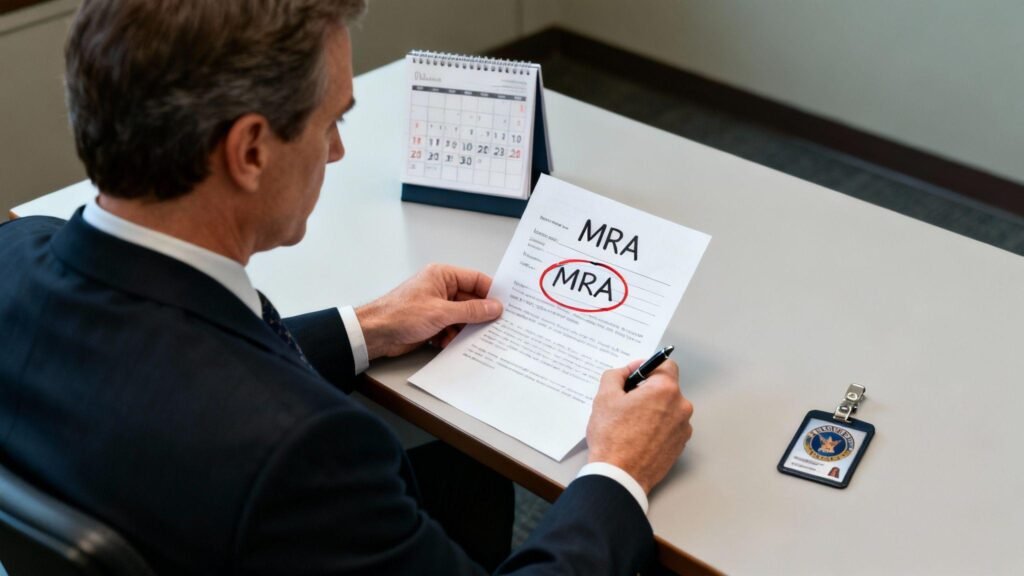
And there’s another date worth circling: January 9, 2027. For many federal workers, that Saturday marks the end of the 2026 leave year. Retiring around that deadline could produce a substantially larger annual leave payout, particularly for employees carrying hundreds of hours of unused vacation time.
Here’s the catch. The best date for your annual leave payout isn’t necessarily the best date for starting your pension. That distinction can cost thousands of dollars if you get it wrong.
With November 2026 underway, the retirement planning window is getting smaller. Here’s what federal employees should know before choosing their final day of service.
Best Federal Retirement Dates for 2026 and Early 2027
Several dates stand out because they align with federal retirement, payroll, or leave-year rules. However, not every agency follows the same payroll schedule, and not every employee has identical retirement eligibility.
Here’s how the commonly discussed dates compare.
| Retirement date | Main advantage | Important consideration |
|---|---|---|
| January 10, 2026 | End of 2025 leave year for most employees | Already passed |
| May 31, 2026 | End-of-month pension timing | Already passed |
| October 31, 2026 | End-of-month pension timing | Already passed |
| December 31, 2026 | FERS pension generally begins January 1 | May not capture final pay-period leave accrual |
| January 9, 2027 | End of 2026 leave year for most employees | Regular FERS pension generally begins February 1 |
The dates above assume an employee qualifies for an immediate, unreduced FERS retirement under the ordinary rules.
The Office of Personnel Management’s FERS guidance explains the retirement system’s eligibility and benefit provisions.
For employees still working in November, the real decision increasingly comes down to December 31 versus January 9.
Why Your Federal Retirement Date Matters So Much
Federal retirement planning usually focuses on the big numbers: years of service, high-three average salary, Thrift Savings Plan savings, and monthly pension estimates.
Those numbers matter, of course. But retirement timing deserves a place in the conversation, too.
Three calendar rules can change the financial outcome.
First, a regular immediate FERS annuity generally begins on the first day of the month following separation.
Second, federal employees normally earn annual and sick leave under biweekly pay-period rules, with final accrual depending on the applicable requirements.
Third, unused annual leave is generally paid in a lump sum when an employee separates from federal service.
Each rule creates an opportunity. The challenge is finding a retirement date that balances them.
December 31, 2026: Why New Year’s Eve Could Be the Smart Choice
For federal employees eligible for an immediate FERS pension, December 31 offers a straightforward advantage.
Retire on December 31, and the annuity generally begins January 1, 2027.
Retire on January 1 instead, and the regular FERS annuity generally doesn’t begin until February 1.
That’s a meaningful difference.
Consider a federal employee expecting a gross FERS pension of $3,200 per month.
Illustrative pension commencement comparison
Retire December 31
$3,200
January gross annuity entitlement
Retire January 1
$0
January regular FERS annuity entitlement
Example assumes an eligible immediate FERS retirement. Actual payment processing may take longer, and working an additional day may produce salary or other compensation.
That doesn’t automatically mean retiring December 31 is worth $3,200 more in total lifetime income. Salary earned by continuing to work, additional service credit, leave payouts, and other benefits must also be considered.
Still, for someone determined to begin retirement at the start of 2027, December 31 is a compelling option.
January 9, 2027: The Annual Leave Payout Opportunity
Now things get interesting.
For most federal employees on the standard leave-year calendar, January 9, 2027, is the final day of the 2026 leave year.
Why is that important?
Because annual leave that exceeds an employee’s applicable carryover ceiling can generally be included in the lump-sum payment when the employee separates before the leave is forfeited.
Most federal employees stationed in the United States have a standard annual leave carryover ceiling of 240 hours. Some employees have different limits, including certain overseas workers and Senior Executive Service members.
Suppose an employee has 360 hours of unused annual leave and earns $50 per hour.
Example: Value of 360 hours of annual leave
$18,000
360 hours × $50 hourly basic pay
| 240-hour standard carryover ceiling | $12,000 |
| 120 hours above the ceiling | $6,000 |
The $6,000 is the illustrative value at risk if 120 hours are forfeited. It is not an automatic loss upon entering the new leave year; restoration rules and individual circumstances can matter.
This is why January 9 attracts attention. An employee separating on the final day of the leave year may be able to receive payment for leave that would otherwise become subject to forfeiture when the new leave year begins.
But there is a significant trade-off.
A regular FERS annuity for someone retiring January 9 generally begins February 1, not January 10.
That means the employee may receive additional salary and annual leave value while waiting longer for pension entitlement to begin.
Whether the trade-off makes financial sense depends on the actual numbers.
OPM’s official annual leave lump-sum payment guidance explains how these payments are calculated.
The Pay Period Detail Federal Employees Shouldn’t Ignore
There’s a common misconception that any retirement date falling on a Saturday automatically guarantees the final pay period’s leave accrual.
It doesn’t.
Federal leave accrual generally depends on satisfying the applicable pay-period requirements, including the rules governing separation during a pay period.
For many full-time employees, annual leave accrual is:
| Federal service | Annual leave per full biweekly pay period |
|---|---|
| Less than 3 years | 4 hours |
| 3 to less than 15 years | 6 hours, with 10 hours in the final full pay period of the leave year |
| 15 years or more | 8 hours |
Most full-time federal employees also earn four hours of sick leave per full biweekly pay period.
A worker with at least 15 years of service earning $50 per hour could receive another $400 in annual leave value from an eight-hour accrual, assuming the employee qualifies for that accrual.
However, January 9, 2027, is not necessarily the end of a pay period for every federal agency. Employees must verify their agency’s actual payroll calendar before relying on that date to earn additional leave.
The official OPM leave administration resources provide the broader rules.
December 31 vs. January 9: Which Retirement Date Pays More?
There’s no universal winner.
Take a hypothetical employee earning $130,000 annually, with a $3,000 monthly FERS pension and substantial unused annual leave.
Retiring December 31 generally starts the annuity on January 1.
Retiring January 9 generally delays annuity commencement until February 1, but may preserve additional salary and leave benefits.
The decision requires comparing several amounts:
- Gross pension entitlement for January.
- Salary earned by remaining employed through January 9.
- Any additional annual leave earned and paid.
- Any use-or-lose annual leave that could be forfeited.
- Changes in retirement service credit, taxes, and benefit deductions.
For employees with relatively little excess annual leave, December 31 may be financially attractive.
For employees carrying a large use-or-lose balance, January 9 deserves closer examination.
One important distinction: annual leave lump-sum payments and FERS pension payments can have different tax withholding and payment timing. A larger gross payout doesn’t necessarily mean an equally large increase in take-home cash.
Don’t Forget Your FERS Retirement Eligibility
Even a perfectly timed retirement date won’t help if you don’t meet the applicable retirement eligibility requirements.
For a regular, immediate, unreduced FERS retirement, the common combinations are:
| Age | Required creditable service |
|---|---|
| Minimum retirement age (MRA) | 30 years |
| 60 | 20 years |
| 62 | 5 years |
Your MRA generally falls between ages 55 and 57, depending on your birth year.
Employees with at least 10 years of service may also qualify under MRA+10 provisions, although annuity reductions and postponement rules can apply.
Certain law enforcement officers, firefighters, air traffic controllers, and other special-category employees have different retirement provisions.
Employees should confirm eligibility through their agency’s human resources office before finalizing a separation date.
What About Your TSP and Unused Sick Leave?
The Thrift Savings Plan is another major part of retirement planning, but your separation date doesn’t automatically determine how much your investments will be worth.
Market performance, contributions, withdrawals, investment allocation, and taxes all matter.
An additional pay period might allow another TSP contribution, depending on payroll timing. But that alone shouldn’t determine when someone retires.
Unused sick leave deserves attention as well.
For eligible immediate FERS retirements, unused sick leave can increase the service credit used to calculate the annuity. It generally doesn’t help an employee meet the minimum service requirement for retirement eligibility.
Also, unused sick leave isn’t paid out as cash under the ordinary federal retirement rules.
For employees near a service-credit milestone, an agency-generated retirement estimate is particularly valuable.
Fact Check: Are These Really the Five Best Federal Retirement Dates?
The five dates circulating in retirement planning discussions aren’t all equally advantageous, and some of the commonly repeated explanations are oversimplified.
January 10, 2026, and January 9, 2027, are the respective leave-year ending dates for most employees under the standard federal leave calendar.
December 31, 2026, is an end-of-month date that generally allows an eligible regular FERS annuity to begin January 1, 2027.
However, May 31 and October 31, 2026, should not automatically be described as both month-end and pay-period-end dates. Pay-period alignment varies by agency and payroll schedule.
Similarly, retiring on January 9 does not start an ordinary FERS pension immediately the next day.
The claim that working one day into a new month always costs a full month of pension income also needs context. It can delay regular FERS annuity commencement, but an employee may earn salary and other benefits during the additional service period.
The safest approach is to verify three things before retiring: your eligibility, your agency’s pay-period calendar, and the amount of leave that will actually be paid.
Final Thoughts: Make Your Retirement Date Work for You
The final weeks of a federal career can have an outsized financial impact.
December 31, 2026, offers a clean transition into a January pension commencement date for eligible regular FERS retirees. January 9, 2027, offers a potential annual leave advantage for employees approaching the end of the leave year.
Neither date guarantees the biggest possible lifetime benefit.
Before submitting retirement paperwork, ask your HR office for side-by-side estimates showing pension commencement, final salary, leave balances, and lump-sum payment amounts.
After decades of federal service, spending a little extra time checking the calendar is a pretty sensible investment.
Frequently Asked Questions (FAQs)
1. What is the best day to retire from federal service in 2026?
December 31, 2026, is a strong remaining choice for eligible regular FERS employees because their annuity generally begins January 1, 2027. However, employees with significant use-or-lose annual leave may prefer to examine January 9, 2027.
2. Is January 9, 2027, a good federal retirement date?
Yes, particularly for employees who want to separate at the end of the 2026 leave year and potentially receive payment for accumulated annual leave above their carryover ceiling. The pension commencement delay must also be considered.
3. Will I lose my annual leave if I retire after the leave year ends?
Not necessarily. Annual leave within your applicable carryover ceiling generally remains available, while excess use-or-lose leave may be forfeited unless an exception or restoration provision applies. The actual separation date and leave records matter.
4. When will my FERS pension start if I retire December 31, 2026?
For an eligible regular immediate FERS retirement, the annuity generally commences January 1, 2027. The first actual payment may arrive later because retirement applications require processing.
5. Should I retire at the end of the month or the end of a pay period?
Both can be useful, but they serve different purposes. Month-end retirement can optimize regular FERS annuity commencement, while pay-period timing may affect final leave accrual. Compare the financial consequences rather than choosing a date based on one rule alone.

Jackson is a dedicated USA news writer, who covers important topics such as Social Security payment schedules, COLA increases, IRS tax refunds, stimulus payment announcements, Medicare eligibility, retirement benefits, and changes to state driving laws. His goal is to provide clear, informative, and easy-to-follow articles that help retirees, seniors, taxpayers, and American families stay informed.